highway bus tire rim diameter <40.6 cm
CN → US| HS Code | Tariff Rate | Origin | Destination | Doc |
|---|---|---|---|---|
| 4012128050 | 38.4% | CN | US | Official Doc |
| 4012124035 | 39.0% | CN | US | Official Doc |
| 4011205050 | 38.4% | CN | US | Official Doc |
| 4011201035 | 39.0% | CN | US | Official Doc |
Product Images
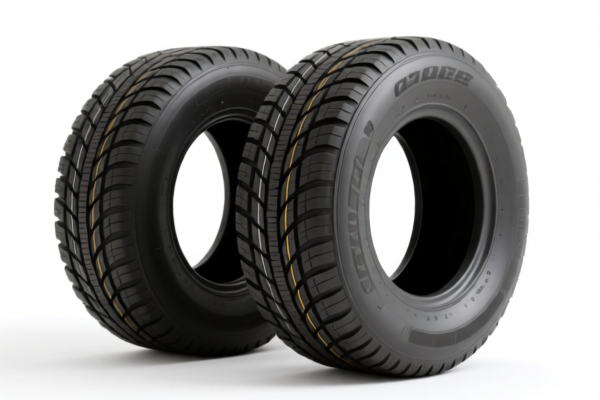
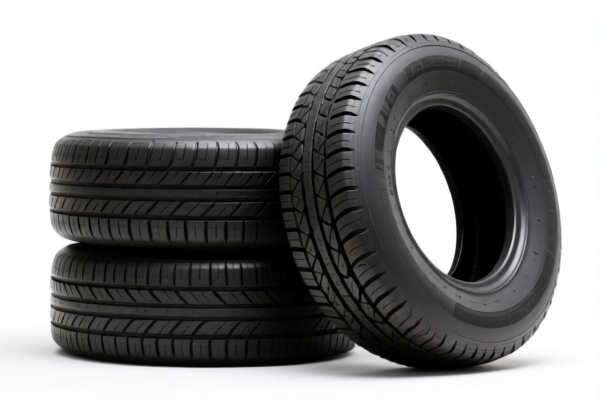


AI Analysis
🚛 Highway & Off-Highway Bus Tire Rim Diameter < 40.6 cm
🌐 HS Code Reference & Customs Clearance Guide | 2026 Latest Tariff Analysis | Professional Clearance Strategy
📌 I. Product Definition & Classification: What Exactly Are "Bus Tires"?
Bus tires, specifically those with a rim diameter of less than 40.6 cm (approximately 16 inches or smaller), are specialized rubber products designed for various bus applications. In international trade, they are categorized based on their intended use (Highway vs. Non-Highway/Off-Highway) and construction type (Radial vs. Non-Radial).
Key Distinctions: * Highway Use: Designed for paved roads, long-distance travel, and standard bus operations. * Non-Highway/Off-Highway Use: Designed for construction sites, mining, industrial yards, or specialized off-road bus operations (e.g., airport baggage carts, shuttle buses in confined spaces).
⚠️ Critical Classification Point:
- If the tire is explicitly stated as "For Highway Bus Use" → Likely 4012.12
- If the tire is for "Non-Highway/Off-Highway" use → Likely 4011.20
- Material: All are rubber.
- Size Constraint: Rim diameter < 40.6 cm is the key filter for these specific HS codes.
📦 II. HS Code Classification Details (2026 Latest Tariff Authority Comparison)
Based on the provided data, here are the four specific HS codes relevant to bus tires with a rim diameter < 40.6 cm:
| HS Code | Product Description | Intended Use | Construction Type | Total Tax Rate |
|---|---|---|---|---|
4012.12.80.50 |
Highway Bus Tires | Highway Bus Use | Not specified (General) | 38.4% |
4012.12.40.35 |
Non-Highway Bus Tires | Non-Highway Use | Not specified (General) | 39.0% |
4011.20.50.50 |
Off-Highway Bus Tires | Non-Highway Use | Not specified (General) | 38.4% |
4011.20.10.35 |
Radial Off-Highway Bus Tires | Non-Highway Use | Radial | 39.0% |
🔍 Key Notes:
- 4012 Series: Generally refers to new pneumatic tires of rubber. The "4012.12" specifically targets bus tires.
- 4011 Series: Refers to pneumatic tires of rubber. The "4011.20" specifically targets bus tires.
- Distinction between 4012 and 4011: Often depends on the specific construction details (e.g., reinforced casing, radial vs. bias-ply) and customs interpretation of "Highway" vs. "Non-Highway" classification nuances in certain jurisdictions.
- Tax Rate Variance: Slight differences (38.4% vs. 39.0%) arise from the "Additional Duties" calculation base or specific footnote applications.
💰 III. 2026 Latest Tariff Rate Breakdown (Including Additional Duties & Policy Add-ons)
✅ Applicable Country: United States (US)
✅ Origin: China (CN)
✅ Effective Date: 2025 onwards (Including subsequent imports)
🎯 1. 4012.12.80.50 —— Highway Bus Tires (Rim Diameter < 40.6 cm)
| Item | Details |
|---|---|
| Base Tariff | 3.4% (Ad Valorem) |
| Section 301 Additional Duty | +25.0% |
| Section 122 Duty | +10.0% |
| Total Tax Rate | 38.4% |
| Tax Calculation | CIF Value × 38.4% |
| De Minimis Exemption | ❌ Not Eligible (High-value industrial goods typically excluded) |
| Legal Basis Path | USITC:4012.12.80.50 → Section 301: 25% → Section 122: 10% |
📌 Explanation:
- "Base Tariff 3.4%": Standard Most Favored Nation (MFN) rate for new pneumatic tires.
- "Section 301 Duty 25%": Additional duty imposed on Chinese goods under Trade Act of 1974, Section 301.
- "Section 122 Duty 10%": Additional duty under Section 122 of the Trade Act of 1974 (often applied to specific categories of Chinese imports).
- Total 38.4% is a significant barrier to entry. Must be factored into cost calculations.
🎯 2. 4012.12.40.35 —— Non-Highway Bus Tires (Rim Diameter < 40.6 cm)
| Item | Details |
|---|---|
| Base Tariff | 4.0% (Ad Valorem) |
| Section 301 Additional Duty | +25.0% |
| Section 122 Duty | +10.0% |
| Total Tax Rate | 39.0% |
| Tax Calculation | CIF Value × 39.0% |
| De Minimis Exemption | ❌ Not Eligible |
| Legal Basis Path | USITC:4012.12.40.35 → Section 301: 25% → Section 122: 10% |
📌 Note:
- Higher base tariff (4.0% vs. 3.4%) leads to a higher total rate.
- Still subject to the same Section 301 and Section 122 duties.
🎯 3. 4011.20.50.50 —— Off-Highway Bus Tires (Rim Diameter < 40.6 cm)
| Item | Details |
|---|---|
| Base Tariff | 3.4% (Ad Valorem) |
| Section 301 Additional Duty | +25.0% |
| Section 122 Duty | +10.0% |
| Total Tax Rate | 38.4% |
| Tax Calculation | CIF Value × 38.4% |
| De Minimis Exemption | ❌ Not Eligible |
| Legal Basis Path | USITC:4011.20.50.50 → Section 301: 25% → Section 122: 10% |
📌 Explanation:
- Same tax structure as Highway Bus Tires (4012.12.80.50).
- "Off-Highway" classification does not reduce tariff burden in this case.
🎯 4. 4011.20.10.35 —— Radial Off-Highway Bus Tires (Rim Diameter < 40.6 cm)
| Item | Details |
|---|---|
| Base Tariff | 4.0% (Ad Valorem) |
| Section 301 Additional Duty | +25.0% |
| Section 122 Duty | +10.0% |
| Total Tax Rate | 39.0% |
| Tax Calculation | CIF Value × 39.0% |
| De Minimis Exemption | ❌ Not Eligible |
| Legal Basis Path | USITC:4011.20.10.35 → Section 301: 25% → Section 122: 10% |
📌 Note:
- "Radial" construction often falls under a different subheading with a slightly higher base tariff (4.0%).
- Total rate matches4012.12.40.35.
🛠️ IV. Customs Clearance Practical Advice (Field Avoidance Guide)
✅ 1. Required Documentation Checklist (Mandatory)
| Document | Mandatory? | Description |
|---|---|---|
| ✅ Product Specification Sheet | ✔️ | Must include: Tire size, load index, speed rating, construction type (Radial/Bias), Rim Diameter < 40.6 cm, intended use (Highway/Non-Highway). |
| ✅ Technical Drawing/Structure Diagram | ✔️ | To confirm radial vs. non-radial construction if ambiguous. |
| ✅ Product Photos (with Label) | ✔️ | Clear view of DOT number, size marking, and sidewall text (e.g., "For Highway Use Only" or "Off-Highway Use"). |
| ✅ Commercial Invoice | ✔️ | Must accurately describe the product using the exact HS Code description. |
| ✅ Packing List | ✔️ | Detail quantity, weight, and packaging type. |
| ✅ Certificate of Origin (CO) | ✔️ | If claiming preferential rates (not applicable here due to high tariffs, but still required for origin proof). |
| ✅ Third-Party Test Report | ✔️ | ECE, DOT, or ISO certification to prove quality and safety standards. |
✅ 2. Declaration Tips (Key Mnemonic)
🔥 "Use Defines Code, Radial May Cost More, Diameter Matters, Don't Guess!"
| Scenario | Correct Declaration | Wrong Approach |
|---|---|---|
| Highway Bus Tire | 4012.12.80.50 (38.4%) |
Misdeclare as Non-Highway → Potential penalty or audit |
| Non-Highway Bus Tire | 4012.12.40.35 (39.0%) |
Misdeclare as Highway → Risk of duty underpayment penalty |
| Radial Off-Highway Tire | 4011.20.10.35 (39.0%) |
Miss "Radial" feature → Incorrect base rate (3.4% vs 4.0%) |
| Non-Radial Off-Highway Tire | 4011.20.50.50 (38.4%) |
Assume all off-highway are the same → Incorrect subheading |
📌 Critical Reminder:
- Rim Diameter < 40.6 cm is a mandatory condition for these specific HS codes.
- If the rim diameter is ≥ 40.6 cm, these HS codes do not apply. You must refer to different HS codes (e.g., for larger truck/bus tires).
- Intended Use must be clearly stated in the commercial invoice and product description. Ambiguity leads to delays.
✅ 3. Special Case Handling
| Situation | Handling Advice |
|---|---|
| OEM Tires for Bus Manufacturers | Provide customer PO and technical specs. Clearly state "For Highway Bus Use" or "For Off-Highway Shuttle Bus Use". |
| Tires for Both Uses? | Cannot be dual-classified. Choose the most common or primary use. If mixed, separate shipments or clarify with customs broker. |
| Retreaded Tires? | Different HS Code entirely (e.g., 4012.13). Do not use new tire codes. |
| Wheel Rims Included? | Tires and rims are separately classified. Rims fall under 8708.95 or similar. Do not bundle them into the tire HS code. |
🌍 V. Global Market Clearance Comparison (2026 Latest)
| Country/Region | Recommended HS Code | Tariff Rate | Certification Required | Notes |
|---|---|---|---|---|
| 🇺🇸 USA | 4012.12.80.50 / 4012.12.40.35 / 4011.20.50.50 / 4011.20.10.35 |
38.4% - 39.0% | DOT, EPA (if applicable) | Highest duty burden. Section 301 + Section 122 apply. |
| 🇨🇳 China | 4011.20 or 4012.12 | ~3.4% - 4.0% | CCC (if required) | No additional anti-dumping duties typically for tires. |
| 🇪🇺 EU | 4011.20 or 4012.12 | 0% - 5% | E-Mark (ECE) | No Section 301/122. Lower duty burden. |
| 🇯🇵 Japan | 4011.20 or 4012.12 | 0% - 5% | JIS | No major additional duties. |
📌 Conclusion:
- USA is the most challenging market due to 38.4%-39.0% total duties.
- EU, Japan, and China offer significantly lower tariff barriers.
- Cost Optimization: Consider sourcing from non-Chinese origins (if available) to avoid Section 301/122 duties in the US, but this may not be feasible for all suppliers.
📌 VI. Common Errors & Pitfalls (Lessons Learned)
❌ Error 1: Declaring "Bus Tires" without specifying Rim Diameter
👉 Consequence: Customs may reject the classification or assign a default higher duty code.
Fix: Always state "Rim Diameter < 40.6 cm" in the description.
❌ Error 2: Confusing Highway vs. Non-Highway use
👉 Consequence: Incorrect HS Code → Potential penalty, seizure, or audit.
Fix: Clearly label the tire sidewall and invoice with "For Highway Use" or "For Off-Highway Use".
❌ Error 3: Ignoring Section 122 Duty
👉 Consequence: Underestimating total landed cost.
Fix: Always add 10% (Section 122) + 25% (Section 301) to the base rate for US imports from China.
❌ Error 4: Bundling Rims with Tires in Declaration
👉 Consequence: Misclassification of goods. Rims are not tires.
Fix: Declare tires and rims separately.
✅ Correct Declaration Example:
"New Pneumatic Rubber Tires, for Highway Bus Use, Radial Construction, Rim Diameter 16 inches (<40.6 cm), Model XYZ, DOT Certified, HS Code 4012.12.80.50"
🎯 VII. Conclusion: Professional Declaration Saves Money!
🎯 Remember Mnemonic:
🔹 "Use Defines Code, Radial May Cost More, Diameter Matters, Don't Guess!"
🔹 "USA Tariffs are High (38-39%), Plan Ahead, Don't Let Customs Stop You!"
📌 Pro Tip:
If your tires are intended for Off-Highway Use, consider if 4011.20 is more appropriate than 4012.12 to ensure accuracy, even if the total tax rate is similar.
Always apply for an Advance Ruling (Pre-Classification) from US Customs (CBP) if your product type is unique or borderline. This provides legal certainty and avoids post-import audits.
📣 Immediate Action:
📞 Contact a Licensed Customs Broker + Provide Product Specs + Apply for CBP Advance Ruling
🚀 Ensure Smooth Clearance, Avoid Penalties, and Optimize Landed Cost!
✨ Professional Customs Clearance Starts with Accurate Classification!
💼 Your Cost Efficiency Depends on Precise Tariff Calculation!
Customer Reviews
About HS Code Classification
The Harmonized System (HS) is an internationally standardized nomenclature developed by the World Customs Organization (WCO) to classify traded products. Over 200 countries use the HS system as the basis for customs tariffs, trade statistics, and import/export regulations.
Each HS code follows a hierarchical structure:
- Chapter (2 digits) — Broad category of goods (e.g., Chapter 84: Machinery and Mechanical Appliances)
- Heading (4 digits) — More specific grouping within the chapter
- Subheading (6 digits) — Internationally standardized breakdown, used by all WCO member countries
- National subdivisions (8-10 digits) — Country-specific extensions for further classification, such as US HTSUS 10-digit codes
Correct HS code classification is essential for smooth customs clearance, accurate duty payment, and compliance with trade regulations. Misclassification can lead to customs delays, overpayment of duties, or penalties.
When importing from CN to US, the applicable tariff rates may include:
- Most-Favored-Nation (MFN) rate — The standard duty rate applied to WTO members
- General rate — Applied to countries without trade agreements
- Trade remedy duties — Additional tariffs such as Section 301 (anti-dumping), Section 232 (national security), or countervailing duties
The information provided on this page is for reference purposes only. For official classification, please consult with your local customs authority or a licensed customs broker.